


Slugging: Why Petroleum Jelly Works On Dry Winter Skin, And When To Skip It
Our verdict
Partly.
A lid, not a drink.
If your feed has turned into faces glazed like a donut right before bed, you're not imagining it. Slugging is everywhere.
The idea is simple. Wash your face, finish your routine, then seal it all in with a thin layer of petroleum jelly. Sleep on it. Wake up soft.
The jar has been in your medicine cabinet for decades, which is exactly why we wanted to know if the hype holds up. So we did what we do with every trend in our Trend or here to stay? series. We found what the experts actually publish, read it, and made our call.
Spoiler: it works, just not for everyone.
What dermatologists say about slugging
Our source is Cleveland Clinic. Its article, Slugging: Does This Skin Care Trend Work?, published April 18, 2024, quotes dermatologist Amy Kassouf, MD.
Her explanation starts with what petroleum jelly actually is: "a simple and very occlusive ointment." In plain English, it sits on top of your skin and forms a barrier that, as the article puts it, "keeps water from evaporating."
That trapped water does the work. "The retained hydration can fill the epidermis like a sponge, thickening it and making it more pliable and elastic," says Dr. Kassouf.
More likely to be helpful in the dry winter months.
Amy Kassouf, MD, Cleveland Clinic
Notice the word she uses, though. Retained. Petroleum jelly holds on to the water that's already in your skin. It doesn't add any. It's a lid, not a drink.
Who slugging suits, and who should skip it
Here's the part your feed skips. Slugging is great for some skin and a bad idea for others.
Good for: Dry skin, especially in winter
Skip if your skin is oily: "Skin that is oily already has an adequate or even too-robust lipid layer," says Dr. Kassouf.
Skip if you're acne-prone: Cleveland Clinic warns it "could actually make your acne worse, not better."
Skip on broken or infected skin: "It may not allow the infection to clear," Dr. Kassouf warns.
Skip the actives that night: Don't trap alpha hydroxy acids, beta hydroxy acids or retinoids under it.
Why slugging is only partly here to stay
The half that holds up: on dry skin, in dry weather, a cheap jar of petroleum jelly does exactly what dermatologists say it does. It seals in water.
The half that doesn't: it isn't for oily or acne-prone skin, and Dr. Kassouf says it's "less necessary in the warmer, more humid months." This is a winter trick, not a forever routine.
We've been in beauty for more than 10 years, and we've watched plenty of trends come and go. The ones we trust are honest about who they're for. Slugging is, once you read the source. Your feed just leaves that part out.
How we'd try slugging
Think of it as tucking your skin in for the night. These are our how-to tips, and where a step comes from Cleveland Clinic, we say so.
- 01Start clean. "Slugging should only be done on clean skin," says Dr. Kassouf. Cleanse, then moisturize.
- 02Skip your acids and retinoids tonight. Cleveland Clinic says to avoid alpha hydroxy acids, beta hydroxy acids and retinoids under the jelly.
- 03Use a little. Pure petroleum jelly, or one with minimal added ingredients. A thin layer is plenty, or just the driest spots, like your eyelids and lips.
- 04Wait about half an hour. Then head to bed with a towel over your pillowcase.
- 05Wash it off in the morning. "Cleansing is important because the skin is a living organ," says Dr. Kassouf.
- 06Fill the cup, not just the lid. Slugging holds water in. Drinking it is how it gets there. Every packet of Super Beauty Elixir goes into 20 oz of water, with 150 mg of hyaluronic acid.
Dry spell? Dr. Kassouf says "you may need to do this a couple nights in a row to catch up." And if your skin gets red or irritated after slugging, see your dermatologist.
The inside half
A lid only helps if there's something in the cup. That's why our founder Lisa's first rule of healthy skin isn't a cream. It's water.
Her three basics haven't changed since we started: drink your water, protect your skin from the sun, and fill the nutrition gap. Slugging is a nice winter extra on top. The water comes first.
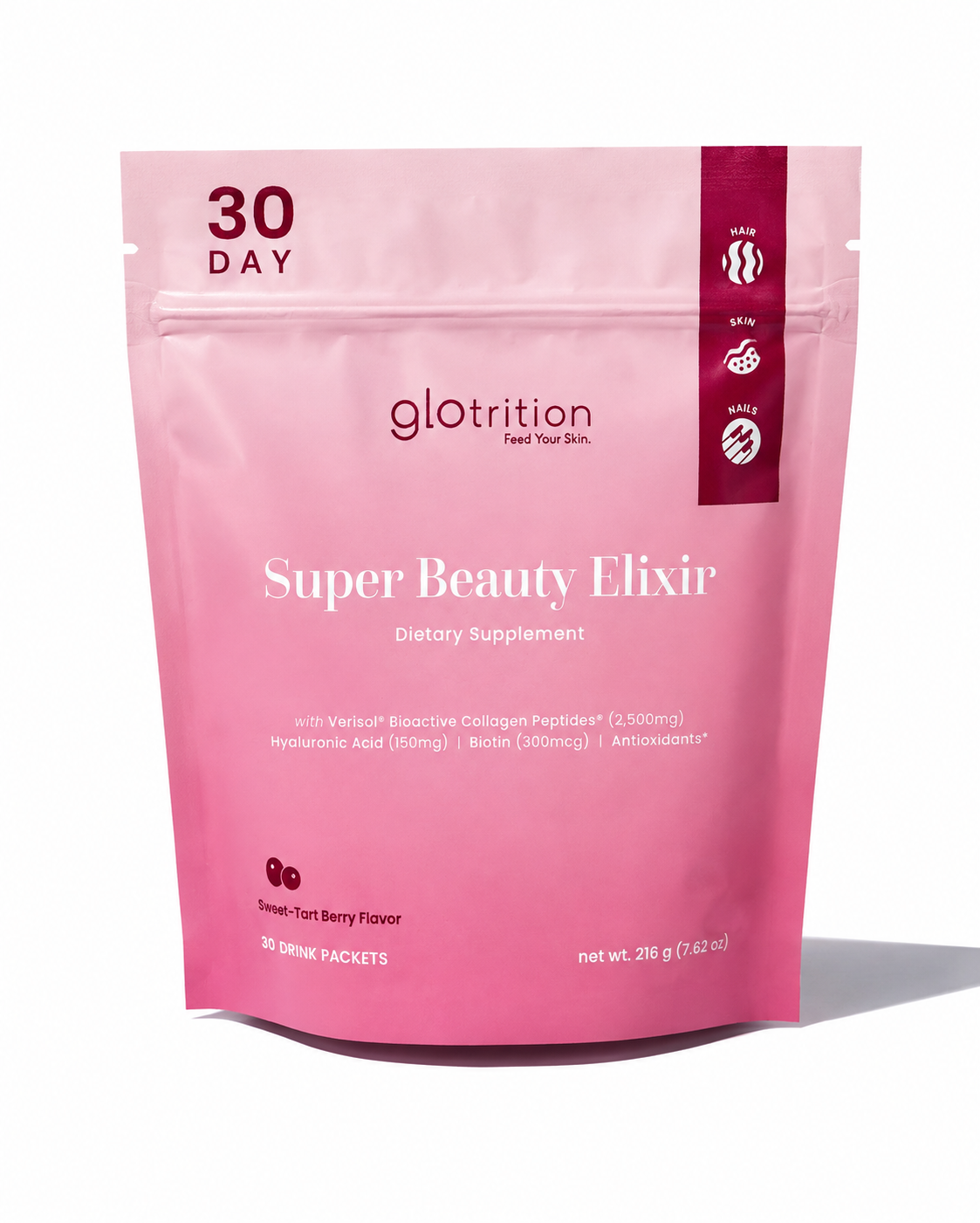
Super Beauty Elixir
Slugging seals water in. Start with the water. 2,500 mg of Verisol® collagen peptides and 150 mg of hyaluronic acid, mixed into 20 oz of water. One packet a day.
Shop Super Beauty ElixirQuick answers
Is slugging good for dry skin?
Yes. Petroleum jelly forms a barrier that keeps water from evaporating, which is why Dr. Kassouf says it's most helpful in the dry winter months.
Is slugging bad for acne-prone skin?
It can be. Cleveland Clinic says slugging could make acne worse, so acne-prone and oily skin should skip it.
How often should you slug?
As needed. Dr. Kassouf says a couple of nights in a row can help dry skin catch up, and it's less necessary in warm, humid months.
Can you slug over retinol?
Cleveland Clinic says no. Avoid retinoids and alpha or beta hydroxy acids under petroleum jelly.
xo, Glotrition
Source: Cleveland Clinic, Slugging: Does This Skin Care Trend Work?, April 18, 2024.
Small Daily Rituals. Big Results.
Build your inside-out beauty routine with clinically backed collagen support. One stick a day, visible results in 8 weeks.